Ground improvement in Geelong represents a critical discipline within geotechnical engineering, addressing the challenges posed by the region's variable and often problematic subsurface conditions. This category encompasses a suite of advanced techniques designed to modify the physical properties of soil and rock, enhancing bearing capacity, reducing settlement, and mitigating risks associated with soft, loose, or otherwise unsuitable ground. From major infrastructure projects to commercial and residential developments, the need for reliable ground improvement is paramount in a city experiencing significant growth and urban renewal, particularly in areas underlain by the Newer Volcanics and the expansive Werribee Formation. A robust understanding of local geology and the application of tailored solutions, such as Deep Soil Mixing (DSM) design, ensures the long-term stability and safety of structures across the region.
Geelong's geological landscape is dominated by Quaternary basalt flows of the Newer Volcanics Province, which overlie Tertiary sedimentary sequences including the demonstrably variable Werribee Formation. The basalts are often interbedded with soft alluvial clays, silts, and peat layers, creating a highly stratified profile with significant lateral variation. These soft, compressible layers are prone to excessive settlement under load, while the presence of buried paleochannels and variable rockhead depths adds further complexity. Additionally, areas of loose, unconsolidated sands are susceptible to liquefaction, a concern addressed by methods like vibrocompaction design. This geological heterogeneity demands a thorough site-specific investigation before any improvement strategy can be formulated, making generic solutions ineffective and potentially hazardous.
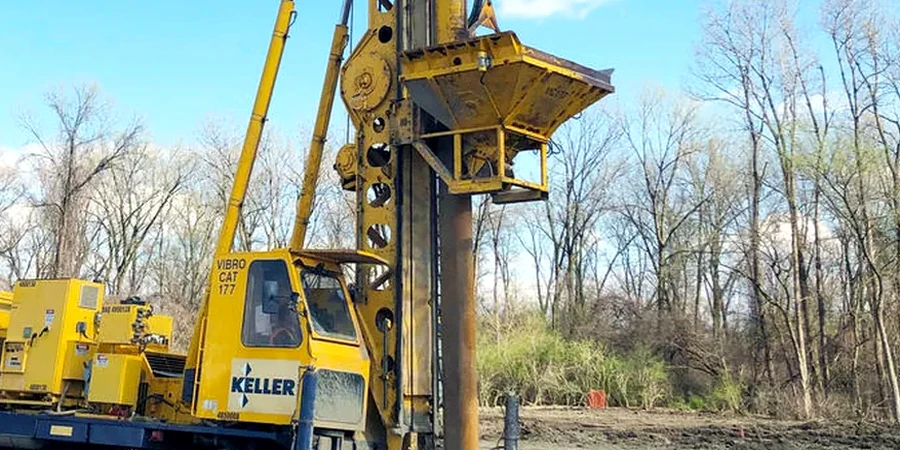
The application of ground improvement techniques in Victoria, and specifically Geelong, is governed by a framework of Australian Standards and local regulations. Key documents include AS 4678 for earth-retaining structures, AS 3798 for site investigations, and AS 2159 for piling design and installation, which often inform the performance criteria for improved ground. The National Construction Code (NCC) and the Victorian Building Authority (VBA) provide overarching compliance requirements, ensuring that all designs meet stringent safety and serviceability standards. For projects involving containment or environmental control, such as landfill geotechnics, adherence to EPA Victoria guidelines for lining and capping systems is non-negotiable. These regulations mandate rigorous testing and validation, such as post-treatment verification of strength and permeability, to confirm that the ground improvement has achieved the specified design parameters.
The types of projects requiring ground improvement in Geelong are diverse, reflecting the city's role as a major port and regional hub. Large-scale civil infrastructure, including the duplication of the Princes Highway and the development of the Geelong Convention and Exhibition Centre precinct, frequently encounters soft soils requiring stabilisation. The expansion of the Port of Geelong and associated freight and logistics terminals demands ground treatment for heavy-duty pavements and crane hardstands. In the commercial and residential sectors, multi-storey developments on the Bellarine Peninsula and in growth corridors like Armstrong Creek often necessitate jet grouting design to underpin foundations or create groundwater cut-off walls. Similarly, effective management of subsurface water is critical, making geotechnical drainage design an integral part of any comprehensive improvement scheme, ensuring long-term performance by preventing water-related degradation of the treated ground.
Quick answers
What is the primary goal of ground improvement in Geelong's typical soil conditions?
The primary goal is to mitigate the high settlement and low bearing capacity risks associated with Geelong's prevalent soft alluvial clays, silts, and loose sands overlying the Werribee Formation. Techniques are designed to increase density, shear strength, and stiffness, while also controlling groundwater and preventing liquefaction, ensuring the ground can safely support structural loads without excessive long-term deformation.
Which Australian Standards are most relevant to ground improvement design in Victoria?
Key standards include AS 4678 for earth-retaining structures, which often interface with improved ground, and AS 2159 for piling. AS 3798 provides guidelines for the site investigations that underpin the design. For projects with environmental containment, EPA Victoria guidelines are also crucial, dictating performance criteria for permeability and material durability in systems like landfill capping.
How do I determine the most suitable ground improvement method for my Geelong site?
Selecting the appropriate method requires a comprehensive geotechnical site investigation to define the soil profile, groundwater conditions, and the presence of any problematic layers like peat or buried channels. This data informs an analysis of settlement and bearing capacity requirements against the project's loads. The choice between techniques like deep soil mixing, vibrocompaction, or jet grouting depends on the specific soil type, treatment depth, and required performance outcomes.
What role does groundwater play in the design of a ground improvement scheme?
Groundwater is a critical design factor. High water tables can hinder compaction methods, cause instability during excavation, and create buoyancy forces. Improvement techniques like jet grouting and deep soil mixing are often used to create low-permeability cut-off walls. A properly designed geotechnical drainage system is essential to manage water permanently, preventing pore pressure build-up and ensuring the long-term durability and effectiveness of the improved ground mass.