Laboratory testing forms the backbone of every sound geotechnical investigation in Geelong, transforming field samples into reliable engineering parameters. This category encompasses a suite of controlled physical and mechanical tests performed on soil and rock specimens to determine their strength, compressibility, permeability, and classification. Without precise laboratory data, foundation design, slope stability assessments, and earthworks specifications would rely on guesswork rather than science. In Geelong's diverse geological setting, where conditions can shift from basalt-derived clays to alluvial silts within a single site, the role of accredited laboratory analysis becomes even more critical for managing project risk and ensuring long-term structural performance.
Geelong's subsurface is largely shaped by the Newer Volcanics basalt flows to the north and west, the Barrabool Hills sandstone, and the extensive Quaternary alluvial and estuarine deposits along the Barwon River and Corio Bay margins. These formations produce highly variable materials: expansive clays with moderate to high reactivity, weakly cemented sands prone to erosion, and soft compressible silts in low-lying areas. A routine grain size analysis distinguishes these fine-grained soils from granular deposits, while a soil mechanics study integrates this with plasticity and mineralogy to predict behaviour under load. Understanding these local conditions through laboratory testing is not optional; it is essential for addressing the shrink-swell cycles that challenge residential slabs and the settlement issues that affect infrastructure on reclaimed land near the waterfront.
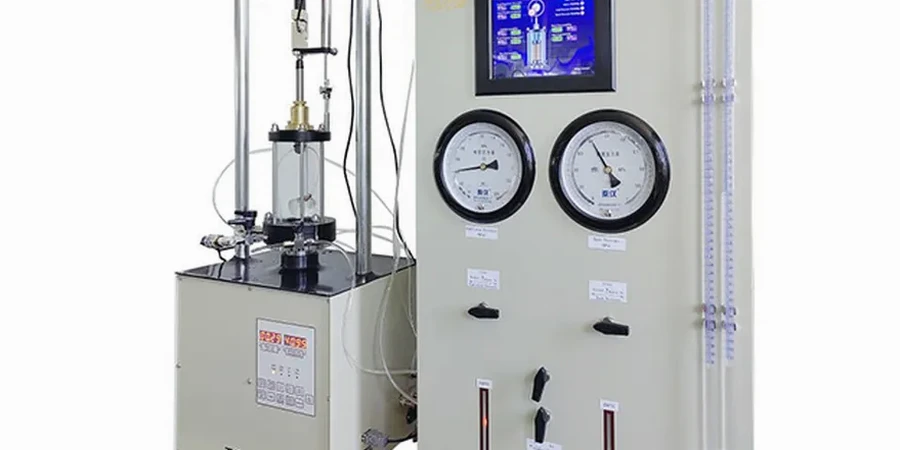
All laboratory testing conducted for geotechnical purposes in Geelong must comply with Australian Standards, primarily the AS 1289 series for soil testing methods. These standards govern every step from sample preparation to test execution and reporting, ensuring consistency and legal defensibility. For instance, AS 1289.6.2.1 dictates the procedure for a direct shear test, while AS 1289.6.6.1 covers the oedometer consolidation test. Laboratories typically operate under NATA accreditation to these standards, which is a prerequisite for most commercial and public-sector projects. Adherence to these rigorous protocols guarantees that results can be confidently used by engineers designing to AS 4678 for earth retaining structures or AS 2870 for residential slabs and footings, both highly relevant to Geelong's construction environment.
The types of projects in Geelong that depend on this category are broad and growing with the region's development. Residential subdivisions in growth corridors like Armstrong Creek and Charlemont require Proctor test (Standard or Modified) data to specify compaction criteria for building pads and access roads, mitigating future settlement. Medium-rise commercial developments in the CBD and along the waterfront rely on triaxial test results to determine the shear strength parameters needed for deep excavation support and pile design in soft estuarine clays. Infrastructure works, from the duplication of the Princes Highway to stormwater retention basins, demand consolidation testing to calculate time-rate settlements under new embankment loads. Each project, regardless of scale, benefits from a tailored laboratory program that answers the specific questions raised by the site's geology and the proposed structural loads.
Quick answers
Why is laboratory testing mandatory for most construction projects in Geelong?
Laboratory testing is mandatory because it provides the quantitative data required by Australian Standards (such as AS 2870 and AS 4678) to design safe and serviceable foundations and earth structures. In Geelong, the presence of reactive clays and soft alluvial soils makes it impossible to reliably estimate bearing capacity or settlement potential from visual classification alone, making controlled lab tests essential for regulatory approval and risk management.
What Australian Standards govern soil laboratory testing in Geelong?
Soil laboratory testing is primarily governed by the AS 1289 series, which details methods for sample preparation, classification, compaction, strength, and consolidation testing. NATA-accredited laboratories in Geelong follow these standards rigorously. For design application, results feed into standards like AS 2870 for residential slabs and AS 4678 for retaining walls, ensuring local compliance.
How do I know which laboratory tests my Geelong project needs?
The required tests are determined by the project's geotechnical consultant based on the site geology, proposed structure type, and anticipated loads. A typical scope for a residential subdivision in reactive clay zones might include Atterberg limits, shrink-swell index, and a Proctor test, while a multi-storey building near Corio Bay would add triaxial and oedometer consolidation tests to address soft clay stability and settlement.
What is the difference between a Standard and Modified Proctor compaction test?
The Standard Proctor test uses a 2.5 kg hammer dropped 300 mm to compact soil in three layers, simulating lighter compaction effort typical of small plant. The Modified Proctor uses a 4.9 kg hammer dropped 450 mm in five layers, replicating heavy modern rollers. The choice depends on project specifications; major roadworks and structural fills in Geelong typically require Modified Proctor values to achieve higher density and strength.